illegal drug trafficking

The illegal drug trade or drug trafficking is a global black market dedicated to the cultivation, manufacture, distribution and sale of drugs that are subject to drug prohibition laws. Most jurisdictions prohibit trade, except under license, of many types of drugs through the use of drug prohibition laws.
Consumption of illegal drugs is widespread globally and it remains very difficult for local authorities to thwart its popularity.
Drug trafficking routes

South America
Venezuela has been a path to the United States and Europe for illegal drugs originating in Colombia, through Central America, Mexico and Caribbean countries such as Haiti, the Dominican Republic, and Puerto Rico.
According to a research conducted by the Abba Eban Institute as part of an initiative called Janus Initiative, the main routes that Hezbollah uses for smuggling drugs are from Colombia, Venezuela and Brazil into West Africa and then transported through northern Africa into Europe. This route serves Hezbollah in making a profit in the cocaine smuggling market to leverage it for terrorist activities.
West Africa
Cocaine produced in Colombia and Bolivia increasingly has been shipped via West Africa (especially in Cape Verde, Mali, Benin, Togo, Nigeria, Cameroon, Guinea-Bissau and Ghana).The money is often laundered in countries such as Nigeria, Ghana and Senegal.
When drugs are sent over land, through the Sahara, the drug traders have been forced to cooperate with terrorist organizations, such as Al Qaida in Islamic Maghreb.
Eastern and Southern Africa
Heroin is increasingly trafficked from Afghanistan to Europe and America through eastern and southern African countries. This path is known as the “southern route” or “smack track.” Repercussions of this trade include burgeoning heroin use and political corruption among intermediary African nations.
Asia
Drugs in Asia traditionally traveled the southern routes – the main caravan axes of Southeast Asia and Southern China – and include the former opium-producing countries of Thailand, Iran, and Pakistan.
A large amount of drugs are smuggled into Europe from Asia. The main sources of these drugs are Afghanistan, along with countries that constituted the so-called Golden Crescent. From these producers, drugs are smuggled into the West and Central Asia to its destinations in Europe and the United States. Iran is now the route for smugglers, having been previously a primary trading route, due to its large-scale and costly war against drug trafficking.
The drugs produced by the Golden Triangle of Myanmar, Laos, and Thailand, on the other hand, pass through the southern routes to feed the Australian, U.S., and Asian markets.
Online
Drugs are increasingly traded online on the dark web or darknet markets
Trade in Specific Drugs
1.Cannabis

The demand for cannabis around the world, coupled with the drug's relative ease of cultivation, makes the illicit cannabis trade one of the primary ways in which organized criminal groups finance many of their activities.
2.Alcohol
 Alcohol, in the context of alcoholic beverages rather than denatured alcohol, is illegal in a number of Muslim countries, such as Saudi Arabia, and this has resulted in a thriving illegal trade in alcohol.The manufacture, sale, transportation, importation and exportation of alcoholic beverage were illegal in the United States during the time known as the Prohibition in the 1920s and early 1930s.
3.Heroin
 Up until around 2004 the majority of the world's heroin was produced in an area known as the Golden Triangle. Another significant area where poppy fields are grown for the manufacture of heroin is Mexico.
According to the United States Drug Enforcement Administration, the price of heroin is typically valued 8 to 10 times that of cocaine on American streets, making it a high-profit substance for smugglers and dealers.
Heroin is generally a preferred product for smuggling and distribution—over unrefined opium due to the cost-effectiveness and increased efficacy of heroin.
Because of the high cost per volume, heroin is easily smuggled.
4.Methamphetamine

Methamphetamine is another popular drug among distributors. Three common street names are or "meth", "crank", and "ice"
Methamphetamine is sometimes used intraveneously, placing users and their partners at risk for transmission of HIV and hepatitis C. "Meth" can also be inhaled, most commonly vaporized on aluminum foil or in a glass pipe. This method is reported to give "an unnatural high" and a "brief intense rush".
Since methamphetamine is easy to produce, the substance is manufactured locally in staggering quantities.
The government of North Korea currently operates methamphetamine production facilities. There, the drug is used as medicine because no alternatives are available; it also is smuggled across the Chinese border
5.Temazepam
 Temazepam, a strong hypnotic benzodiazepine, is illicitly manufactured in clandestine laboratories (called jellie labs) to supply the increasingly high demand for the drug internationally. Many clandestine temazepam labs are in Eastern Europe. The labs manufacture temazepam by chemically altering diazepam, oxazepam or lorazepam. "Jellie labs" have been identified and shut down in Russia, the Ukraine, Czech Republic, Latvia and Belarus.
 6.Cocaine

Cocaine is a highly prominent drug among many drug dealers and manufacturers. The cocaine black market distribution industry is worth more than 85 billion dollars. It has been a heavily fought over and massively produced. Around 1.1 million kilograms of cocaine were made in 2009 and it is believed to have been consumed by around 17 million people worldwide. This drug's mass trade is believed to have been possible by notorious drug dealing kingpin Joaquín "El Chapo" Guzmán who ran the Sinaloa Cartel.
Causes of drug trafficking
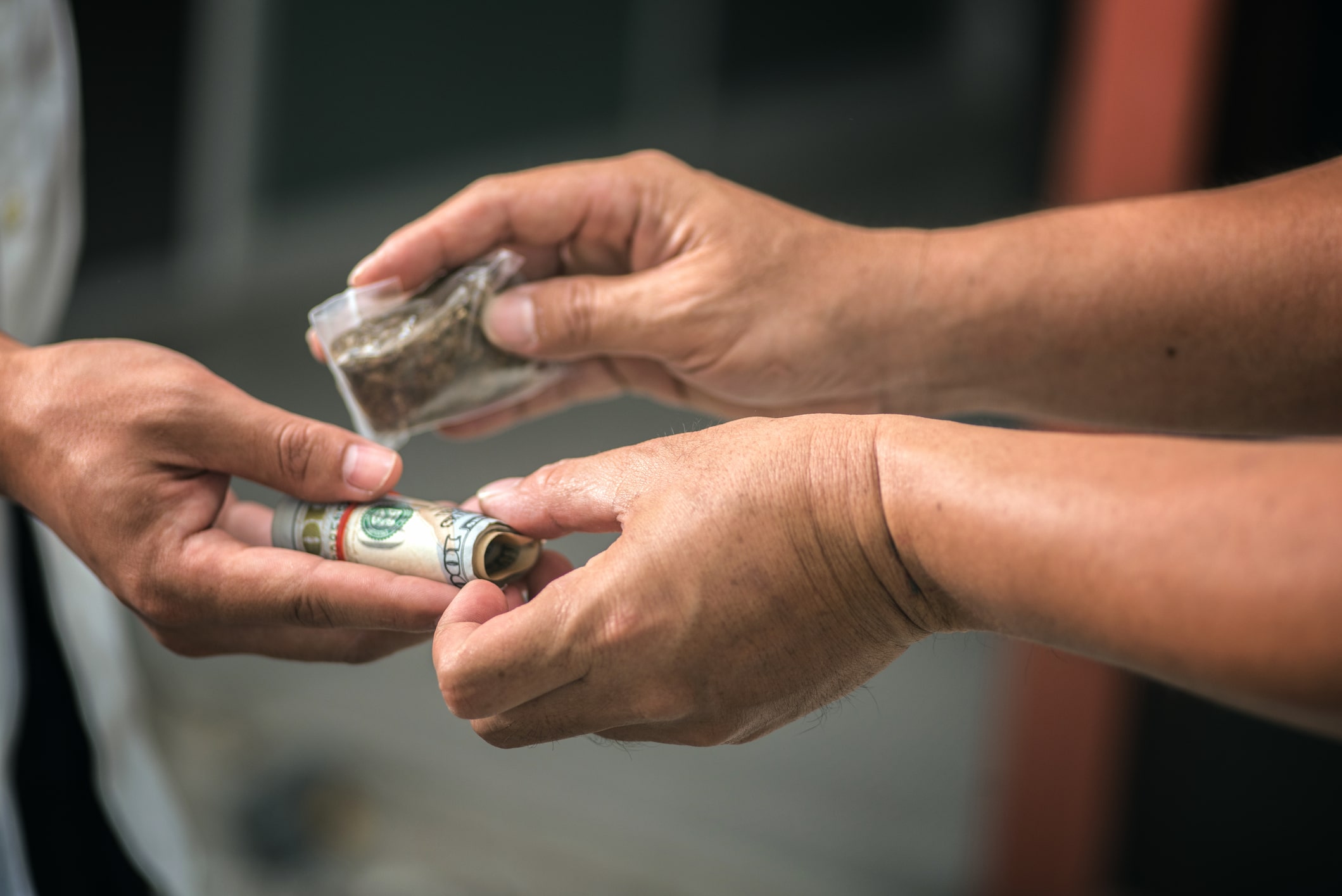
First of all the term “trafficking” usually refers moving wholesale amounts from one area to another. Distributors traffic drugs not street dealers. I don’t think it is always motivated by greed either. It is simply business, people want drugs, they always will and as long as there is a demand for drugs, someone will supply them. Again just business. People get into because it is good money, if you do it properly and don’t use up all your product yourself or throwing parties. Ultimately it is like any other business if you see a place where there is a more demand than supply then you set up shop there and the product will sell itself really. There will always be a demand for drugs and as long as that remains true someone will supply them as I have said. I don’t believe this is selfish at all. Everybody has to make money. Is it really wrong to sell people what they are asking for? They know the risks(as long as they are not kids). It only becomes greedy to keep doing it when you have made enough money from selling for years and refuse to stop even though you have plenty of money to live the rest of your days or start up a legal & profitable business. And that is only greedy because of the risk of getting arrested. And this is one of many reasons why it should be legal. It would also be greedy if you start killing people over territory or customer base. Again if it was legal that would be not be a problem. But the legality was not the question so I won’t go any further into that. Ultimately as I have said, it just a business like any other. Buy for a dollar and sell for two, that simple.
Drug trafficking overview of laws

Drug distribution or trafficking laws are determined by federal laws. They penalize the selling, transportation, and illegal import of unlawful controlled substances, such as marijuana, cocaine, heroin, methamphetamines, and other illegal drugs. The punishment for drug trafficking can vary widely depending on several factors including the type and quantity of drugs involved, geographic area of distribution, and whether children were targeted. Sentences for drug distribution and trafficking can generally range from 3-5 years to life in prison but can be substantially higher when larger quantities are involved.
Drug trafficking/distribution is a felony and is a more serious crime than drug possession. If you're found in possession of drugs, you could be charged with trafficking if police believe you intended to sell them. If you're found with a large quantity of drugs or cash at the time of your arrest, it is likely you'll be facing drug distribution charges.Drug distribution or trafficking also applies to the illegal distribution of prescription drugs, such as pain killers or sleeping pills. The illegal distribution of prescription drugs often involves hydrocodone products and pharmaceutical opiates.
Penalties for Drug Trafficking

Drug trafficking is a very serious crime and is punished more harshly than drug possession. It is criminalized under both federal and state laws, and it is often prosecuted as a federal crime when a defendant moves drugs across state lines. Drug trafficking charges can be applied to small-scale street dealers or large drug cartels, and punishments will typically vary depending on the scale of the defendant’s operation and the type of drugs being trafficked. Thus, for instance, a defendant may face anywhere from 3-10 years of imprisonment and fines of over $100,000 for marijuana trafficking, but he or she may face up to 25 years in prison and fines of half a million dollars if convicted of trafficking in heroin. These sentences may be even higher if certain factors, called “enhancements,” are present. One example of an enhancement is selling drugs in a school zone.
A conviction for drug trafficking also makes a criminal susceptible to additional punishments, particularly in the context of an international operation. This can include the forfeiture of all assets related to the drug trafficking business, such as bank accounts, cars, or properties used in the crime. Seizure of assets is often required if the defendant is sentenced to more than one year in jail. Additionally, since drug trafficking is a felony, it may also make defendants susceptible to immigration consequences, including possible deportation after a prison sentence is served.conclusion to this problem
 There is only ONE solution to the problem of drug trafficking and that is regulation and legalisation.
Supply and demand is a very basic principle of capitalism. Since demand is basically ‘baked in’ because humans suffer and therefore look for ways to relieve that suffering, there will never be an elimination of demand.
Since there will always be demand, there will always be supply, it stands to reason. Another principle of capitalism is that demand chases supply and that high demand, low supply situations create market distortions where you can sell things at an incredible mark up.
As long as people are in pain and suffer, they will use drugs. Therefore, until human suffering is elimated (which I do not see happening in the foreseeable future) there will continue to be a drug problem. The only choice is whether to make that problem worse or better.
Giving control of the drug supply to black market gangsters allows them to set the price, avoid taxes and avoid any kind of regulations regading the purity of drugs sold. You thus have a situation where addicts are paying exorbitant prices for low quality drugs that injure them and the profits go to the worst kind of people.
I would respectfully submit that this situation is the worst of all possible worlds.
If the government regulated such drugs, you would have a situation similar to what exists with alcohol. There are controls making it harder for minors to get, as well as regulations ensuring that there are not additives that will kill or injure people beyond the damage caused by the alcohol itself. Additionally, the government can send inspectors and close down places that sell alcohol if they are doing damage to the surrounding community.
None of these controls exist in a black market. The products are more dangerous than they need to be, much higher priced, sold by much worse people and leading to signifcantly worse outcomes for those using them.
Drugs will always be a problem. The only choice we can make as a society is whether to make this problem better or worse by the way we regulate supply and the way we treat people addicted to such substances.
Comments
Post a Comment